
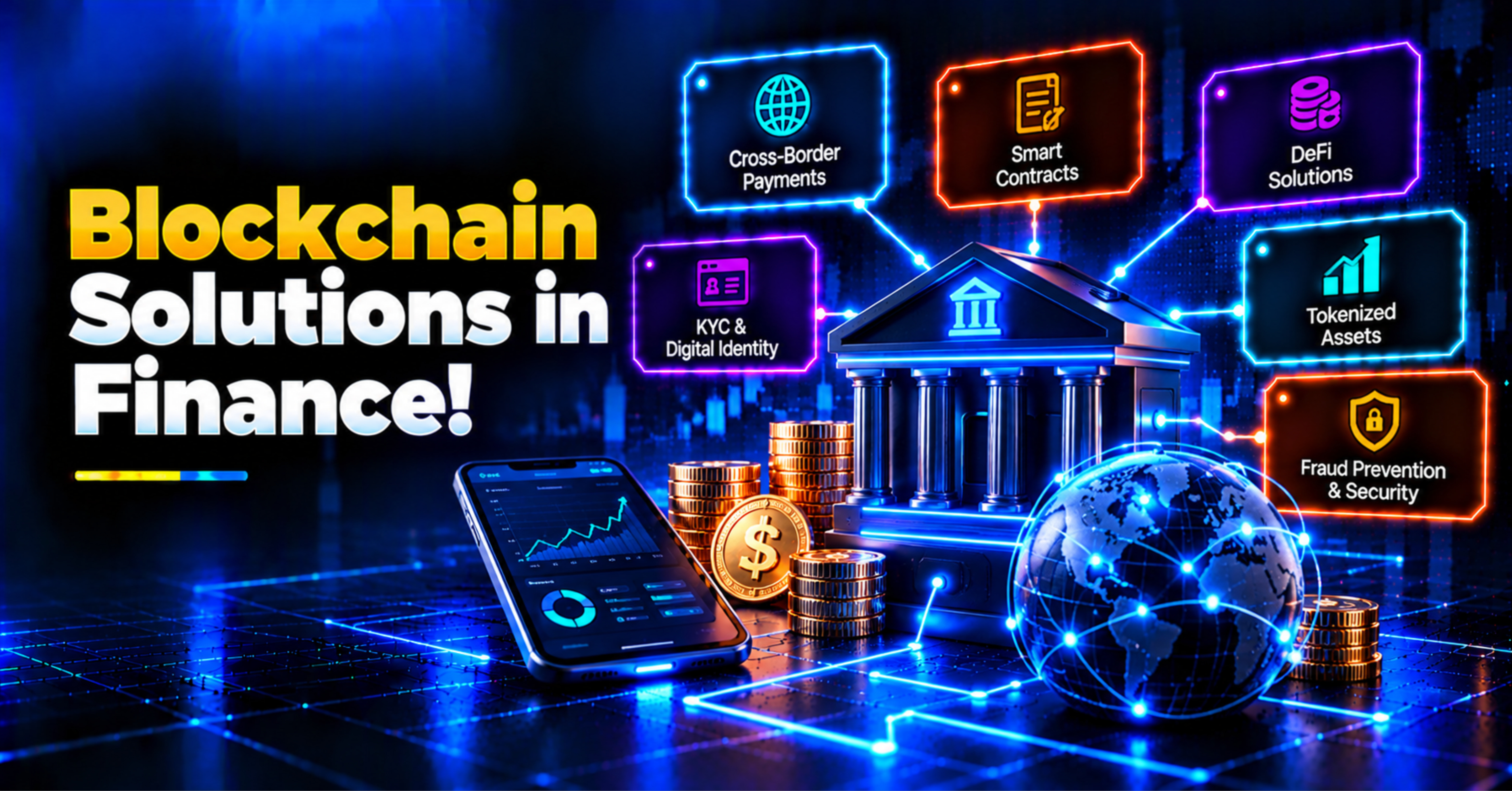
Blockchain Solutions in Finance Industry: Top 10 Use Cases
Blockchain solutions in finance are changing how businesses send money, store records, and manage digital assets. Banks and fintech firms now seek faster, safer, and clearer ways to handle financial tasks. Blockchain can help them meet these needs. It stores records across a shared network. This can reduce manual work and improve trust between parties. In this guide, we explore 10 key uses of blockchain in finance and explain how each one can help businesses.
How Blockchain Solutions in Finance Are Changing the Industry
Traditional financial systems often rely on many steps and third parties. This can cause delays and raise costs. Blockchain offers another way to record and verify data. Each approved record joins a shared ledger. Network rules help protect the data from unwanted changes.
Blockchain does not solve every financial problem. Its value depends on the use case, system design, and legal rules. When used well, it can support faster payments, better records, and clear workflows.
1. Cross-Border Payments
Sending money to another country can take time. Banks may use several partners to complete a transfer. Each step can add cost or delay.
Blockchain-based payment systems can help reduce these steps. They can also make payment status easier to track. Businesses may use them to send funds across borders with fewer manual tasks.
- Track payment status with clear records.
- Reduce some delays caused by multiple intermediaries.
- Improve payment visibility for buyers and sellers.
Payment speed and fees depend on the network, provider, and payment route. For example, Cryptrum offers crypto payment gateway solutions for businesses that want to explore digital asset payments.
2. Smart Contracts for Financial Tasks
Smart contracts are programs that run when set rules are met. They can help automate financial tasks. This reduces the need for repeated manual checks.
Here are some common uses:
- Loan payments: A system can release funds after the required checks are complete.
- Insurance claims: A contract can start a claim payment when agreed conditions are met.
- Property deals: A contract can coordinate payment and ownership steps.
Smart contracts need careful testing. Clear rules and secure code are vital. Legal checks may also be needed before launch.
3. KYC and Digital Identity
Financial firms must verify customer identities. Yet, each firm may use a different process. This can make onboarding slow for users.
Blockchain can support secure digital identity systems. A verified identity may be shared with approved providers, subject to user consent and local rules. This can reduce repeat checks and help keep records consistent.
- Make identity checks easier to track.
- Reduce repeated data entry.
- Improve audit trails for approved checks.
Private data needs strong protection. A good design must limit access and follow all relevant privacy rules.
4. Trade Finance and Digital Records
Trade finance often involves buyers, sellers, banks, and shipping firms. These parties may use separate systems and paper records. This can slow down deals and create errors.
Blockchain can help these parties share approved records through a common system. It can also make document status easier to check.
- Digital shipping records: Reduce reliance on paper documents.
- Letters of credit: Support clear steps for payment and approval.
- Goods tracking: Help parties follow goods and payment status.
These tools can improve visibility across the trade process. Their success still depends on data quality and adoption by all parties.
5. Fraud Detection and Risk Control
Financial fraud can harm both businesses and customers. Blockchain can help by creating traceable records. Approved records are hard to change without detection.
Finance teams can use these records to review transactions and spot unusual activity. They can also use smart tools to flag risks for further checks.
- Keep a clear history of transactions.
- Trace approved changes across a network.
- Support reviews and compliance checks.
Blockchain alone cannot stop every fraud attempt. Strong access controls, monitoring, and security testing remain essential.
6. Decentralized Finance (DeFi)
Decentralized finance, or DeFi, uses blockchain-based tools to offer financial services. Users can interact with smart contracts through supported apps and wallets. Some services allow users to lend, borrow, trade, or provide liquidity.
DeFi can make digital financial tools available at any time. It may also reduce the need for some traditional intermediaries.
- Access services through a crypto wallet.
- Use smart contracts to carry out supported tasks.
- Explore digital markets across borders.
DeFi also carries risks. Smart contract bugs, price swings, scams, and unclear rules can lead to losses. Users and businesses should review these risks before taking part.
7. Tokenized Assets
Tokenization turns rights to an asset into digital tokens. Depending on the legal structure, these tokens may represent a share in property, art, or other assets.
This model may let people access assets with smaller amounts of money. It may also make ownership records easier to manage.
- Support fractional ownership models.
- Keep digital records of asset rights.
- Help approved markets manage asset transfers.
Tokenization does not make every asset easy to sell. Ownership rights, local laws, and market demand still matter.
8. Accounting and Auditing
Finance teams must keep records accurate and up to date. They also need to match records across systems. This work can take time when teams use separate databases.
A shared blockchain ledger can help approved parties view the same transaction history. This may reduce data mismatches and support faster reviews.
- Shared records: Keep approved entries in sync.
- Clear audit trails: Help teams trace recorded transactions.
- Less manual work: Reduce repeated checks where systems are well integrated.
Good accounting still needs sound controls and skilled review. Blockchain supports the process; it does not replace professional audits.
9. Digital Currencies and Financial Inclusion
Digital currencies let people transfer value through digital systems. Some are issued by private groups, while others may be issued by central banks. Their design and rules can differ.
Blockchain-based payment tools may help people send or receive funds through a phone and a supported wallet. This can be useful in areas where access to banking services is limited.
- Support digital payments.
- Help users access services through mobile devices.
- Offer new ways to move value across supported networks.
Access still depends on internet service, local rules, device access, and user skills. Safety and consumer protection must remain priorities.
10. Security and Financial Risk Management
Financial firms need clear data and fast risk checks. Blockchain can support shared records and automated workflows. It can also help approved parties track changes over time.
Other tools can work with blockchain to support risk control. For example, secure data feeds can send market prices to smart contracts. These feeds are often called oracles.
- Track approved collateral records.
- Automate parts of a contract's life cycle.
- Use trusted data feeds for selected market information.
These systems need careful design. Poor data feeds or weak code can still cause errors. Testing and monitoring help lower these risks.
Blockchain in Mobile Finance Apps
Mobile apps make digital finance easy to access. Blockchain features can add tools for payments, asset management, and Web3 services.
- Mobile wallets: Let users manage supported digital assets.
- APIs and SDKs: Help developers connect apps to blockchain networks.
- Biometric access: Add a layer of protection to supported devices.
- QR payments: Make supported transfers easier to start.
- Smart contract access: Connect users to approved blockchain apps.
Mobile apps should protect keys and personal data. Clear warnings and simple steps can also help users avoid mistakes.
How Can Businesses Adopt Blockchain?
Start with a clear business need. Do not add blockchain only because it is popular. First, review the current process and find the main problem.
- Set a goal: Decide what you want to improve.
- Choose the right model: Compare public, private, and permissioned networks.
- Plan security: Define access, key storage, and data protection.
- Check compliance: Review the rules that apply to your business.
- Build a pilot: Test the solution with a small use case.
- Measure results: Check speed, cost, reliability, and user feedback.
A careful plan helps teams avoid waste. It also gives them a clear way to judge the value of the project.
Conclusion
Blockchain solutions in finance can improve payment flows, digital records, identity checks, and asset management. They can also support smart contracts and new financial tools. Each use case has its own needs and risks.
The best results come from clear goals, secure design, and proper testing. Businesses should also review legal rules before launch. With the right plan, blockchain can help build financial systems that are easier to track and manage.
Want to Add Blockchain to Your Financial Solution?
ITSpectrum Solutions builds custom software and blockchain solutions for business needs. Our team can help you review your idea, define key features, and plan the right approach.
Contact our team to discuss your project.
Email: [email protected]
← Back to all blog posts