
NFT Marketplace Development
An NFT marketplace is a search and indexing product with a settlement layer attached. Traders judge it on how fast a collection page loads and whether royalties actually pay — not on how the landing page looks.
Discuss your marketplace
What A Marketplace Needs
The trading surface, the contracts underneath and the indexing that keeps both usable at scale.
Listings & Offers
Fixed price, offers, collection bids and bundles, settled through audited exchange contracts.
Auctions
English, Dutch and reserve auctions with anti-sniping extensions and automatic settlement.
Royalties & Fees
Creator royalties and platform fees applied consistently, with an honest position on enforcement per chain.
Search & Filters
Trait filtering, rarity ranking and sorting that stays fast on collections with a hundred thousand items.
Creator Tools
Collection deployment, metadata management, allowlists and drop scheduling without touching a command line.
Analytics
Floor price, volume, holder distribution and wash-trading filters, computed from on-chain events.
Trading Features
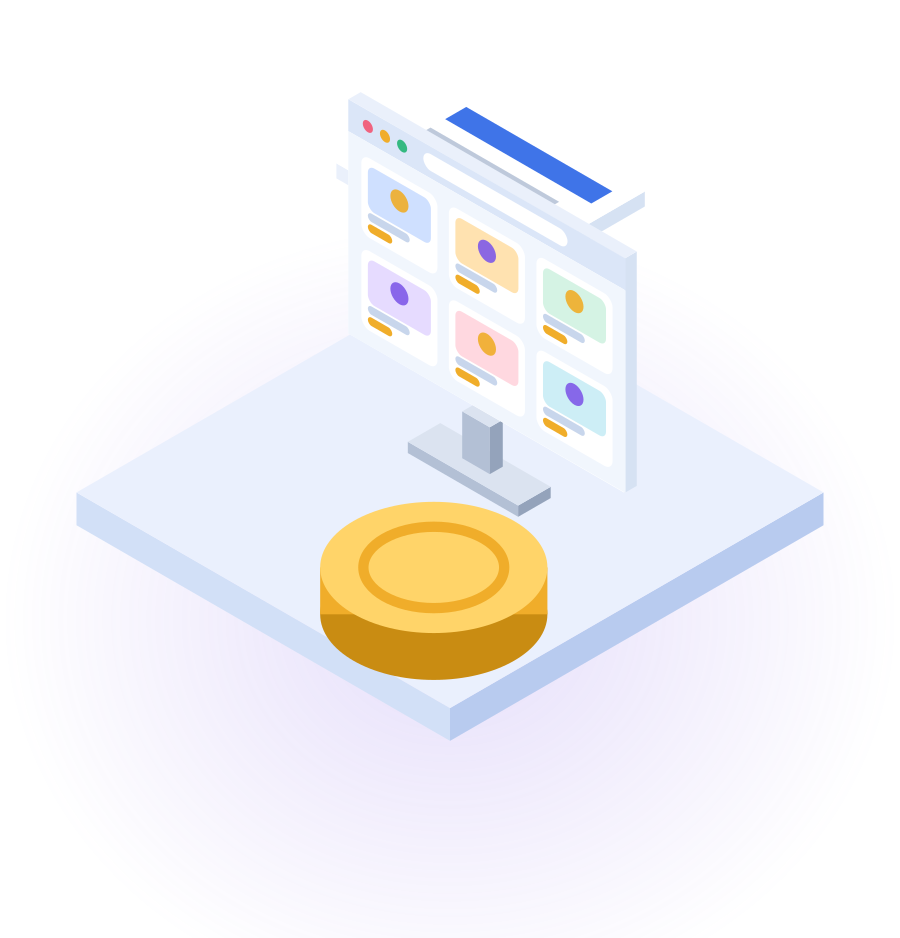
Sweep and bulk actions
Buy several items or list a batch in one transaction, which is table stakes for active traders.
Wallet and card payments
Crypto natively, plus card checkout through a payment provider for buyers who have neither wallet nor tokens.
Offer notifications
Alerts on offers received, outbid events and expiring listings, by push and email.
Moderation tools
Reporting, takedown workflows and verified badges, because a marketplace attracts copies of every popular collection.
Profiles and activity
Portfolio views, watchlists and per-wallet trade history with realised profit and loss.
Approval hygiene
Clear approval prompts and a revoke panel, so users are not left with unlimited allowances they forgot about.
Industries Using Tokenised Assets
Ownership that can be verified and traded matters well beyond collectibles — we build for the sectors where it changes how an asset works.
Talk to our teamToken Platform Capabilities
The engineering that keeps a token platform fast, safe and recognised across the ecosystem.
Indexing pipelines
Chain events normalised into a searchable database with reorg handling, so browsing never waits on an RPC.
Media pipeline
Metadata and media cached, resized and pinned rather than hot-linked from a public gateway.
Audited exchange logic
Signature-based orders and settlement reviewed externally before launch.
Royalty handling
Creator royalties applied consistently, with an honest position on what each chain can enforce.
Batch operations
Sweeps, bulk listings and batch transfers, which is what active traders actually need.
Account abstraction
Sponsored gas and embedded wallets so a first-time buyer is not blocked by an empty balance.
How We Build It
Contracts and indexer come first — the interface is comparatively quick once those are solid.
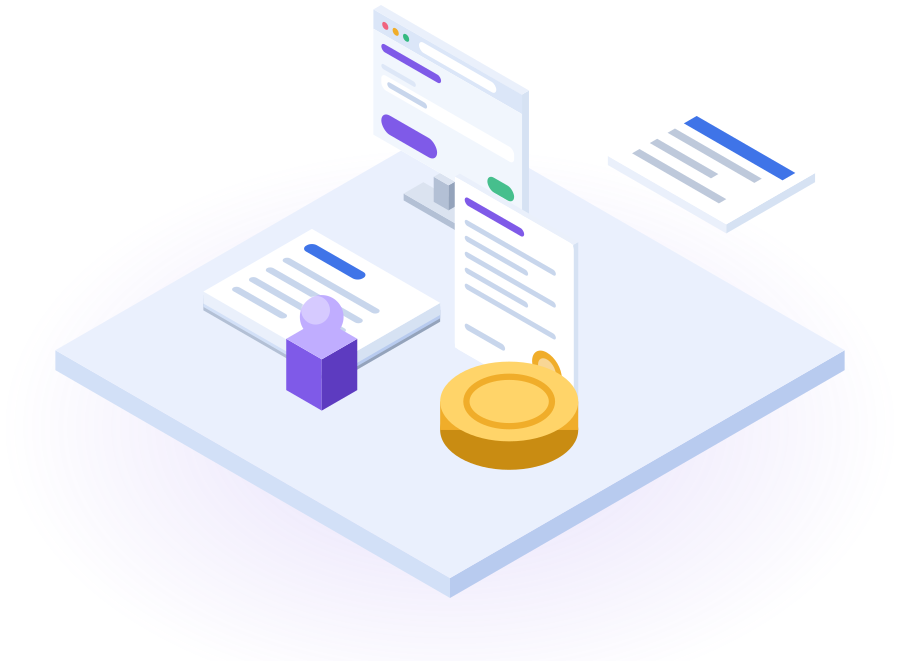
Model the market
Order types, fees, royalties and chains agreed, because they define the exchange contracts.
Contracts and indexer
Exchange contracts audited-ready and the ingestion pipeline built against real collections.
Marketplace UI
Browsing, item pages, trading flows and creator tools on top of the indexed data.
Audit and launch
External contract audit, load testing on a large collection, then launch.
Launch A Marketplace Traders Stay On
Tell us the chains, the order types and the collections you expect. We will scope the contracts and the indexing behind them.
Get a scope and quoteMarketplace Questions
Everything you need to know about our nft development work.