
NFT Token Development
The token standard you choose decides what your product can do two years from now — whether items can be rented, fractionalised, bundled or bound to an identity. Picking it casually is the most expensive shortcut in NFT development.
Discuss your token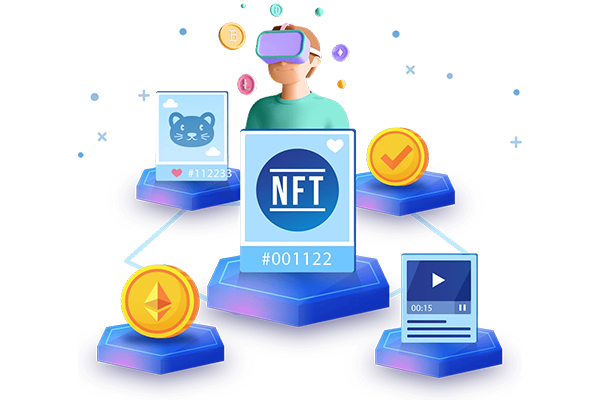
Token Types We Build
Matched to what the asset actually is, rather than defaulting to ERC-721 for everything.
ERC-721 Collectibles
Unique items with per-token metadata, batch-optimised minting and enumerable extensions where needed.
ERC-1155 Multi-Token
Semi-fungible items — editions, in-game resources, tickets — with far cheaper batch transfers.
Rentable Tokens
ERC-4907 style rental with a user role separate from ownership, so an item can be lent without transferring it.
Soulbound Tokens
Non-transferable credentials for memberships, certificates and reputation, with a revocation path.
Token-Bound Accounts
ERC-6551 accounts so an NFT can own assets itself — inventories, bundles and composable items.
Fractionalisation
Vault and share contracts splitting ownership of high-value items, with a buyout mechanism.
What We Deliver

Royalty support
EIP-2981 royalty information plus, where applicable, transfer-level enforcement.
Metadata design
Trait schema, media handling and permanent storage, planned so it can be indexed and filtered.
Upgrade strategy
A considered position on immutability versus upgradeability, with governance stated openly to holders.
Access control
Roles for minting, pausing and administration, held by a multi-sig rather than a single wallet.
Verified source
Published and verified on the block explorer, with a natspec-documented interface.
Integration support
Help getting your collection recognised correctly by marketplaces, wallets and analytics platforms.
Industries Using Tokenised Assets
Ownership that can be verified and traded matters well beyond collectibles — we build for the sectors where it changes how an asset works.
Talk to our teamToken Platform Capabilities
The engineering that keeps a token platform fast, safe and recognised across the ecosystem.
Indexing pipelines
Chain events normalised into a searchable database with reorg handling, so browsing never waits on an RPC.
Media pipeline
Metadata and media cached, resized and pinned rather than hot-linked from a public gateway.
Audited exchange logic
Signature-based orders and settlement reviewed externally before launch.
Royalty handling
Creator royalties applied consistently, with an honest position on what each chain can enforce.
Batch operations
Sweeps, bulk listings and batch transfers, which is what active traders actually need.
Account abstraction
Sponsored gas and embedded wallets so a first-time buyer is not blocked by an empty balance.
How We Deliver Tokens
Short projects, but the standard choice deserves real thought.
Choose the standard
What the asset is and what it must do later decides the standard and the extensions.
Implement and test
Contract written with a full test suite, gas measured per operation.
Ecosystem testing
Deployed to testnet and checked against wallets, marketplaces and indexers.
Audit and deploy
Review, then mainnet deployment with verified source and documentation.
Get The Standard Right First Time
Tell us what the asset is and what holders should be able to do with it. We will recommend the standard and scope the contract.
Talk to our contract teamToken Questions
Everything you need to know about our nft development work.